
Top 10 AI News
Guided learning lets “untrainable” neural networks realize their potential

MIT researchers at CSAIL have developed a new “guided learning” method that allows even previously untrainable neural networks to learn effectively. By using another network’s built-in biases as a guide, these fragile models can be trained successfully. This breakthrough shows that neural nets once thought to fail may still have powerful capabilities when given the right guidance.
A new way to increase the capabilities of large language models

Researchers from the MIT-IBM Watson AI Lab have devised a new neural architecture that substantially improves state tracking and reasoning in large language models. This approach boosts accuracy over long text passages, helping LLMs maintain context and memory of information through multiple steps of reasoning. Such advances promise stronger performance in tasks like summarization and dialogue.
“Robot, make me a chair”
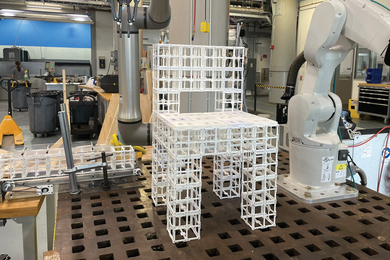
MIT researchers demonstrated an AI-driven design system that lets users create and build multicomponent objects by simply describing them in natural language. In a demo, the user says “make me a chair,” and the system generates a 3D design composed of modular parts that a robot can assemble. This advances AI-assisted design by seamlessly translating language into physical objects.
Deep-learning model predicts how fruit flies form, cell by cell

MIT scientists have trained a deep-learning model to predict the cell-by-cell development of fruit fly embryos. The AI learned from time-lapse data of fly embryos and can forecast the movements and shapes of cells as they divide and organize. This research could help in understanding tissue formation and early disease markers by revealing how development patterns are encoded biologically.
Robots that spare warehouse workers the heavy lifting
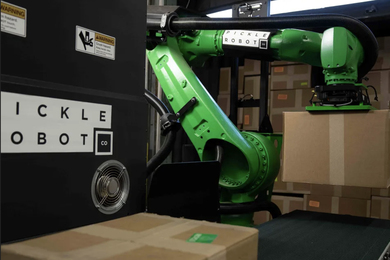
Founded by MIT alumni, Pickle Robot’s autonomous machines can lift and move heavy packages in logistics centers without human assistance. These robots use AI vision and suction grippers to unload trucks inside warehouses, sparing workers from strenuous lifting. The startup’s technology showcases how AI-driven automation can improve safety and efficiency in material handling.
US stocks rose again in 2025 after overcoming turbulence from tariffs and Trump’s fight with the Fed
U.S. stock markets ended 2025 on a high note despite earlier volatility. The year saw historic plunges over concerns about trade tariffs, interest rate hikes, and a speculative AI technology bubble. By December, the rally resumed, with major indices reaching record highs after investors shook off fears of a crash and focused on strong earnings and economic data.
Google’s parent buys data center energy specialist Intersect for $4.75 billion to help power AI
Alphabet Inc., Google’s parent, announced a $4.75 billion deal to acquire Intersect Power, a data-center energy company. The move aims to secure sufficient electricity to power Google’s rapidly expanding AI operations. Intersect will continue to operate independently while providing reliable clean energy to fuel the growing demands of artificial intelligence services in Google’s data centers.
The rise of deepfake cyberbullying poses a growing problem for schools
Schools across the country are facing a new form of harassment: AI-powered deepfake bullying. In one high-profile case, students used AI to create explicit fake images of classmates. These fabricated nudes led to criminal charges and schools struggling to address the harm. Educators warn that such AI-enabled harassment is a serious and growing challenge for school communities.
Boys at her school shared AI-generated, nude images of her. After a fight, she was the one expelled
A 13-year-old girl in Louisiana was expelled after defending herself against classmates who used AI to create nude images of her. The AI-generated photos were shared on social media, causing emotional trauma. When she retaliated against the harasser, the school punished her, highlighting how educators are still ill-equipped to handle AI-driven cyberbullying.
South Korea to require advertisers to label AI-generated ads
Starting in 2026, South Korea will require that all advertisements created with AI be clearly labeled. The law is a response to deceptive ads using deepfake celebrities and fake experts promoting everything from weight loss pills to illegal services. Regulators say the move protects consumers (especially the elderly) and maintains market integrity amid rapidly growing AI capabilities.
Trump signs executive order to block state AI regulations
President Trump signed an executive order preventing individual states from creating their own AI oversight laws. He argued that a patchwork of state rules would harm innovation and make the U.S. less competitive with countries like China, which pursue centralized AI policies. The order directs federal authorities to ensure that AI regulation is uniform nationwide.
Militant groups are experimenting with AI, and the risks are expected to grow
U.S. intelligence agencies report that militant organizations, including ISIS, are increasingly using AI for propaganda. They employ generative tools to create deepfake videos and realistic fake audio to recruit supporters. This trend raises new security concerns as extremist groups harness readily available AI technology to spread disinformation and recruit internationally.
Humanoid robots take center stage at Silicon Valley summit, but skepticism remains
At the Humanoids Summit in Mountain View, California, engineers and investors showcased the latest human-like robots under development. Companies from Disney to startups demoed machines that walk, talk, and gesture. While attendees expressed excitement about AI-powered robotics, many experts warned that practical, cost-effective humanoid robots are still years away and remain unproven commercially.
AI-powered police body cameras, once taboo, get tested on Canadian city’s ‘watch list’ of faces
In Edmonton, Canada, police are piloting body cameras that use AI facial recognition to alert officers if they approach someone on a high-risk watch list. Developed by Axon, the system scans live video feed for faces of thousands of suspects. This marks a controversial shift toward automated policing, as Axon’s own ethics board had previously warned against AI face recognition on cameras.
US health department unveils strategy to expand its adoption of AI technology
The U.S. Department of Health and Human Services announced a new AI strategy to boost the use of artificial intelligence in healthcare. The 20-page plan, unveiled by HHS Secretary RFK Jr., outlines five pillars including risk management, tool development, workforce training, and R&D funding. The goal is to improve efficiency and foster innovation while safeguarding patient data and outcomes.
Microsoft investing $17.5 billion in India for AI and cloud infrastructure
Tech giant Microsoft said it will invest a record $17.5 billion in India’s AI and cloud infrastructure over the next four years. CEO Satya Nadella announced the plan during a meeting with Prime Minister Modi. The investment is aimed at expanding data centers and AI research in India, reflecting India’s key role in Microsoft’s global technology strategy.
WhatsApp faces European antitrust investigation over artificial intelligence
The European Commission is launching a formal antitrust probe into Meta’s WhatsApp over its use of AI. Regulators are concerned that WhatsApp’s plans to integrate AI-powered features (like chat suggestions and automated tools) may violate competition rules or harm user privacy. This investigation reflects Europe’s broader scrutiny of big tech and emerging AI-driven services.
The Architects of AI Are TIME’s 2025 Person of the Year
TIME named the “Architects of AI” as its Persons of the Year for 2025, honoring tech leaders and researchers such as Jensen Huang (Nvidia) and others who advanced artificial intelligence. The issue highlights how AI has become ubiquitous in society, celebrating those who built transformative AI systems. TIME remarked that this recognition marks AI’s progression from a niche tool to a mainstream force.
AI Minted More Than 50 New Billionaires In 2025

A Forbes analysis found that the 2025 boom in artificial intelligence created over 50 new billionaires worldwide. Major tech company valuations surged on AI enthusiasm, and startup founders in AI sectors saw their net worth enter nine figures. The article details some of the high-profile individuals and companies behind this rapid wealth generation.
As OpenAI Shifts To For-Profit, Its Foundation Controls $130 Billion. Who Benefits?
This Forbes piece examines OpenAI’s recent corporate restructuring. OpenAI LP (for-profit) now draws from a nonprofit parent that reportedly holds $130 billion in assets. The article explores implications of this unusual arrangement, asking who will ultimately benefit from those vast resources as OpenAI pursues profit-driven AI development.
Amazon’s Robotaxi Unit Launches In San Francisco Without Steering Wheels—Or Fees

Amazon-backed Zoox has begun operating robotaxis in San Francisco that lack steering wheels, mirrors, or pedals. The service is currently free to riders, as the company awaits regulatory approval for fares. Zoox says these fully autonomous vehicles will eventually revolutionize urban transport, though earning that trust will depend on safety and public acceptance.
Open Source Project With Little Revenue In Talks To Raise At Least $160 Million
A little-known open-source AI project, despite minimal current revenue, is reportedly seeking a $160 million funding round. Forbes reports that investors see high future value in its technology. The article explores why a project with no major customers yet can attract such attention, highlighting the speculative nature of AI venture funding.
AI Startup Lovable Just Minted One Of Europe’s Youngest Ever Self-Made Billionaires
Lovable AI’s co-founder, in his mid-20s, became one of Europe’s youngest self-made billionaires after a funding round valued the company at $1 billion. Forbes highlights his story as representative of the age of AI entrepreneurship, where a single funding event can skyrocket an innovator’s net worth. The startup focuses on AI-driven consumer tech.
A Look At The Top LLMs Of 2025

This Forbes analysis reviews the leading large language models of 2025, comparing their capabilities and performance. It highlights how new architectures and data approaches have improved AI understanding. The piece forecasts that agent-driven AI assistants will soon reshape business by leveraging these advanced LLMs.
Flytek’s Ainote 2 Brings AI To The Tablet

The new iFlytek Ainote 2 is an AI-powered e-ink tablet that recognizes handwriting in real time. Forbes reports that it can transcribe notes as you write and respond to voice prompts, all in a lightweight design. This gadget brings advanced AI features to e-ink readers, blending natural input with intelligent processing for students and professionals.
How Agent Swarms Will Change The Web And Everything Else

AI “agent swarms”—many small AI workers collaborating—are predicted to transform the internet and everyday tasks. This article explains how these agents will organize massive amounts of data, accelerate automation, and even handle complex decision-making. The author argues that learning to work with AI swarms will become a key skill as 2026 approaches.
Overcoming Top 5 Challenges Of AI Projects At A $5B Regulated Company
A CTO at medical-device maker ResMed shares lessons from deploying AI in a tightly regulated industry. The article describes five key challenges (data quality, compliance, stakeholder buy-in, scalability, etc.) and how the team overcame them. It highlights that even large companies can successfully integrate AI by addressing these core issues systematically.
The Holiday Dissonance: Why AI’s Real Gift This Season Isn’t Efficiency—It’s Permission To Protect Your Sanity
On the busy holiday season, AI tools offer more than productivity—they offer peace of mind. This piece argues that AI’s best use is automating tedious tasks to let people rest. By delegating e-mails, schedules, and planning to AI assistants, readers are reminded that technology can give them permission to unplug and enjoy time with loved ones.
How To Rethink Your Job As AI Agents Reshape Work
Bernard Marr discusses how “AI agents” (small task-focused AIs) are automating routine parts of many jobs. He advises workers to adapt by focusing on uniquely human skills like creativity and relationship-building. The article suggests that as agents handle basic tasks, employees should rethink workflows and leverage AI to enhance, not replace, their role.
Nvidia CEO Jensen Huang visits Republicans as debate over intensifying AI race rages
Nvidia’s CEO Jensen Huang traveled to Washington to meet President Trump and GOP senators. He pressed for U.S. export controls on advanced chips while warning against overly restrictive AI regulations. Huang argued that maintaining U.S. leadership in AI is vital, and cautioned that tight rules could hinder American competitiveness in the global AI race.