
Top 10 AI News
Researchers discover a shortcoming that makes LLMs less reliable
Author: MIT News Staff
Date: November 26, 2025

Large language models can mistakenly learn to link certain sentence patterns with specific topics—and then repeat those patterns without truly reasoning. This unexpected behavior can make the models less reliable, as they regurgitate familiar text patterns instead of providing thoughtful answers. Read full story.
MIT scientists debut a generative AI model that could create molecules addressing hard-to-treat diseases
Author: MIT News Staff
Date: November 25, 2025
Researchers at MIT have unveiled “BoltzGen,” a generative AI that designs protein binders for any biological target from scratch. This tool could speed the discovery of new molecules for hard-to-treat diseases by allowing AI to suggest therapeutic compounds directly. Read full story.
How artificial intelligence can help achieve a clean energy future
Author: MIT News Staff
Date: November 24, 2025

AI is playing a growing role in the clean energy transition. Researchers highlight that AI can optimize power grid operations, guide investment in green infrastructure, and accelerate the development of new energy materials. By managing complexity and improving efficiency, AI tools may help nations meet rising energy demands with low-carbon resources. Read full story.
The cost of thinking
Author: MIT News Staff
Date: November 19, 2025

MIT neuroscientists have found a surprising parallel in how humans and AI solve problems. Both appear to engage in a similar trade-off between speed and accuracy when “thinking” their way through complex tasks. This research suggests that some new AI models may in fact operate more like biological brains than we previously thought. Read full story.
New AI agent learns to use CAD to create 3D objects from sketches
Author: MIT News Staff
Date: November 19, 2025

MIT researchers have developed an AI tool called VideoCAD that can learn to use computer-aided design software. Given a 2D sketch, the AI agent generates a 3D object in the CAD program. This could boost engineers’ productivity and help students learn design, as the tool translates hand-drawn concepts into precise digital models. Read full story.
MIT Energy Initiative conference spotlights research priorities amidst a changing energy landscape
Author: MIT News Staff
Date: November 18, 2025

Industry and academic leaders gathered at the MIT Energy Initiative annual conference to discuss emerging priorities. With the global energy landscape shifting, experts stressed that collaboration is key to advancing innovations in areas like clean energy technology, grid modernization, and sustainable infrastructure. Read full story.
Understanding the nuances of human-like intelligence
Author: MIT News Staff
Date: November 11, 2025

Associate Professor Phillip Isola of MIT is studying how intelligent machines “think” with the goal of safely integrating AI into society. His work examines differences between human reasoning and AI processes, shedding light on what true human-like intelligence might entail and how to ensure AI behaves reliably. Read full story.
MIT Energy Initiative launches Data Center Power Forum
Author: MIT News Staff
Date: November 7, 2025

MIT’s Energy Initiative has launched a new forum focused on the power demands of data centers. Faculty members and industry experts from member companies will address the growing electricity needs of data infrastructure, exploring strategies to supply this demand sustainably as computing power—and AI training workloads—continue to surge. Read full story.
Charting the future of AI, from safer answers to faster thinking
Author: MIT News Staff
Date: November 6, 2025

MIT PhD students who interned at the MIT-IBM Watson AI Lab report on projects to improve AI. Their work focuses on making AI more flexible, efficient, and truthful—ranging from enhancing the accuracy of AI answers to speeding up how fast AI can learn. The projects aim to make AI tools safer and more effective for real-world use. Read full story.
MIT researchers propose a new model for legible, modular software
Author: MIT News Staff
Date: November 6, 2025

To help AI better generate and understand code, MIT researchers unveiled a coding framework that breaks software into simple, modular components. By using clear concepts and simple synchronization rules, this approach makes code more understandable and safer. The framework is designed so future AI models can more effectively produce correct, modular software. Read full story.
Teaching robots to map large environments
Author: MIT News Staff
Date: November 5, 2025
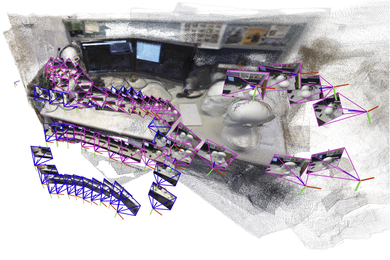
MIT researchers have developed a new method for helping robots quickly map unfamiliar spaces—useful for tasks like search-and-rescue. Using AI, a drone can shoot photos around it and rapidly generate an accurate map of interior obstacles. This allows the robot to navigate unpredictable environments by building a detailed layout as it moves. Read full story.
Helping K-12 schools navigate the complex world of AI
Author: MIT News Staff
Date: November 3, 2025

MIT’s Teaching Systems Lab is working to support educators facing AI in the classroom. By listening to teachers’ stories and challenges, the lab helps K-12 schools understand AI opportunities and risks. Their goal is to provide resources and guidance so that teachers can confidently integrate AI learning and ethical considerations into their curricula. Read full story.
3 Questions: How AI is helping us monitor and support vulnerable ecosystems
Author: MIT News Staff
Date: November 3, 2025

MIT PhD student Justin Kay explains how he uses computer vision and machine learning to protect natural ecosystems. By analyzing aerial and satellite images with AI, his research aims to track changes in habitats and biodiversity. This approach can help scientists detect environmental threats early and make better conservation decisions. Read full story.
A faster problem-solving tool that guarantees feasibility
Author: MIT News Staff
Date: November 3, 2025

MIT researchers have developed FSNet, an AI-based tool that quickly finds feasible solutions for power grid optimization. When grid operators have a goal—like rerouting electricity through certain lines—FSNet can rapidly identify a solution that meets all electrical constraints. This helps ensure the grid stays reliable even as demands surge. Read full story.
Why America’s power grid will be able to withstand the $2.5 trillion A.I. datacenter building boom
Author: Christopher Helman, Forbes Staff
Date: November 27, 2025
The U.S. power grid has many ways to meet the huge energy demand expected from rapid AI expansion. Forbes reports that increased use of solar, natural gas, batteries, and even new nuclear plants can supply the growing needs of AI datacenters. With planning and the right investments, analysts say the grid should cope with this $2.5 trillion building boom without faltering. Read full story.
The Leader’s Guide To Enterprise AI Training: 4 Critical Insights
Author: Anne T. Griffin, Forbes Contributor
Date: November 24, 2025
As companies rush to adopt AI, leadership must ensure employees are prepared. Forbes provides four key insights for enterprise AI training programs: start with a clear strategy, focus on data literacy, align training with business goals, and foster a culture of ethical AI use. The article advises executives on how to build effective training so that organizations can leverage AI while minimizing risks. Read full story.
AWS And Azure failures raise questions about cloud reliability
Author: Sanjit Singh Dang, PhD, Forbes Contributor
Date: November 27, 2025
Recent outages of Amazon Web Services and Microsoft Azure have exposed growing concerns about cloud reliability. In Forbes, a cloud architect warns that as companies shift more critical workloads to the cloud, even a single outage can have huge impacts. The article argues that architects must rethink redundancy and failover strategies to prevent future disruptions in a cloud-dependent world. Read full story.
The unregulated path to superintelligence that could make human labor obsolete
Author: Federico Guerrini, Forbes Contributor
Date: November 27, 2025
MIT physicist Max Tegmark warns that without regulation, the race to artificial superintelligence (ASI) could threaten society. Forbes reports Tegmark’s view that ASI will likely outperform humans at nearly all tasks, risking massive job loss. The piece highlights gaps in current regulations and calls for proactive policies to ensure AI development is safe and beneficial, so human labor isn’t swept aside. Read full story.
Hoping that AGI will enable humans to talk directly to animals
Author: Lance Eliot, Forbes Contributor
Date: November 27, 2025
Some futurists speculate that when AI reaches true general intelligence, it might serve as a universal translator between humans and animals. This Forbes article explores the idea that an “Artificial General Intelligence” (AGI) could decode animal communications. While acknowledging it as speculative science, the author discusses how AGI might analyze animal behavior and vocalizations, allowing humans to understand a pet or wild animal’s “thoughts.” Read full story.
Why AI content is becoming the new engine of online sales
Author: Kolawole Samuel Adebayo, Forbes Contributor
Date: November 27, 2025
AI tools are changing how online sellers market their products. Forbes reports that AI-driven content creation helps small businesses quickly generate product descriptions, images, and ads. By rapidly testing different content, even new sellers can optimize listings for better sales. The article notes this levels the playing field, allowing beginners to compete effectively in crowded online marketplaces. Read full story.
Stargate’s $500B AI feast: How to avoid the wicked risks
Author: Sahar Hashmi, Forbes Contributor
Date: November 27, 2025
Saudi Arabia’s massive Stargate AI project aims to invest $500 billion into advanced AI infrastructure. Forbes examines whether this will be a “transformative feast” or a risky gamble. An AI expert highlights challenges in data handling, energy consumption, and implementation at scale. The article cautions that without careful planning for security and sustainability, such grand AI initiatives could face “wicked risks.” Read full story.
Inside the executive order that could block state AI laws
Author: Paulo Carvão, Forbes Contributor
Date: November 20, 2025
Forbes reports on a draft executive order from President Trump aimed at preempting state-level AI regulations. Lawyers and policy experts say the order would allow federal rules to override any state laws governing AI. The article explains how this could eliminate a patchwork of state policies and standardize AI regulation nationwide—although it may face legal challenges over states’ rights. Read full story.
Judge’s footnote on immigration agents using AI raises accuracy and privacy concerns
Author: Unknown, Associated Press
Date: November 2025
An Illinois federal judge recently noted that an Immigration and Customs Enforcement (ICE) officer used AI to write parts of an official report. In a ruling, the judge criticized the use of AI-generated text for a use-of-force narrative, saying it raised questions about reliability. The case highlights worries that AI could introduce inaccuracies or hide biases in law enforcement reports, underscoring the need for oversight when officers use AI tools. Read full story.
Political consultant defies court order in lawsuit over AI robocalls that mimicked Biden
Author: Unknown, Associated Press
Date: November 2025
An outspoken Republican strategist in New Hampshire continues to use AI-generated robocalls despite a judge’s order not to. The calls mimic President Biden’s voice to influence voters. The consultant argues that the law against viral intimidation doesn’t prohibit AI content. Legal experts say the case is testing boundaries between free speech and deceptive political practices. Read full story.
Alibaba’s cloud business revenue soars 34% driven by AI boom
Author: Unknown, Associated Press
Date: November 25, 2025
Alibaba Group says its cloud computing division saw a 34% increase in revenue over the past year, thanks to a surge in AI demand. The AP reports that more companies using Alibaba’s cloud for AI development and data processing accounted for the rapid growth. Alibaba executives noted that their AI technologies attracted many Chinese and international customers, highlighting the global push to integrate AI-driven services. Read full story.
Trump signs executive order for AI project called Genesis Mission to boost scientific discoveries
Author: Unknown, Associated Press
Date: November 25, 2025
President Trump issued an executive order launching the “Genesis Mission,” a $4 billion AI engineering project aimed at accelerating science. The Department of Energy will work with national labs and universities to use AI for tasks like quantum computing and biotech research. The AP notes the goal is to make the U.S. a leader in AI-driven discovery and ensure America has cutting-edge technology to solve critical challenges. Read full story.
France will investigate Musk’s Grok chatbot after Holocaust denial claims
Author: Unknown, Associated Press
Date: November 21, 2025
French authorities say they will probe Elon Musk’s ChatGPT competitor, Grok, after users complained it gave Holocaust denial answers. The AP reports that regulators are concerned about AI models spreading hate content. X (formerly Twitter) will allow authorities to review Grok’s training data and responses. This move reflects growing scrutiny of AI content as nations grapple with regulating these rapidly evolving systems. Read full story.
OpenAI and Taiwan’s Foxconn to partner in AI hardware design and manufacturing in the US
Author: Unknown, Associated Press
Date: November 21, 2025
OpenAI announced a new collaboration with Foxconn Technology Group to develop next-generation hardware for AI in the United States. At a tech expo in Taiwan, the companies said they will design chips and data-center servers optimized for AI workloads. This partnership signals a push by OpenAI (the maker of ChatGPT) to build more computing power at home, and positions Foxconn (a major Apple supplier) to expand into AI infrastructure. Read full story.
Artificial intelligence sparks debate at COP30 climate talks in Brazil
Author: Unknown, Associated Press
Date: November 18, 2025
At the U.N. climate conference in Brazil, delegates and scientists debated how AI might help—or harm—the fight against climate change. Some speakers highlighted AI’s potential to optimize energy systems and model climate data. Others warned of the technology’s high energy use and electronic waste. The AP describes how nations are considering guidelines so AI innovations can support environmental goals without exacerbating the climate crisis. Read full story.
Pope Leo warns young people to be careful with AI use
Author: Unknown, Associated Press
Date: November 2025
Pope Leo XIII (the pope’s chosen name) told young people to use AI carefully and ethically. During a meeting with students, he noted that while AI can be a powerful tool, it can also mislead or manipulate users. He urged the youth to learn digital discernment so they are not taken in by misinformation or harmful content. The AP reports this was part of the pope’s broader call for ethical technology rooted in human values. Read full story.